Table Of Content

These technological streams enable radical changes in products and services and beyond. Digitalization is, in fact, a paradigmatic change, in which not only the technological shift occurs but behavioural/social shifts in society can be observed, often accompanied by disruption into business models in industries and value chains. Table 2 describes the immediate effect brought by each technology, the ensuing impact on products and services and the consequences on both the side of demand (consumers and society in general) and supply (producers). These OP, ORG and managerial consequences lead designers to operate in a world of growing complexity. To convey this complexity in clear terms, we will adopt a relational model, as first developed in Cantamessa (Reference Cantamessa2011) (see Figure 1), and adapt it to the emerging scenario.
Article contents
This constant vigilance helps you spot trends, identify changes in user behavior, and catch potential issues before they become big problems. Diving into the world of data-driven design is like being a chef who carefully sorts ingredients. Segmenting your data means categorizing users based on specific criteria like age, location, or behavior. This is crucial in data-driven UX design because it helps you understand different user groups’ unique needs and preferences. It offers real-time feedback on how users interact with your product, guiding adjustments for optimal usability. This source ensures your design is not just visually appealing but also functionally effective, meeting user expectations.
Embed Data in the Decision-Making Process
As you advance in your career, data mastery will play an increasing role in how you formulate your design strategy and emerge as a leader in your field. So let’s look at various design positions, which are data-driven, and their salary averages. Many bootcamps claim you don’t need to have any tech experience, but the truth is the learning curve might be a bit steeper. In addition, through practices like gamification, we can ensure our users will continue using our product and will do so often while making their lives easier.
Applying Our Lessons To Your Work
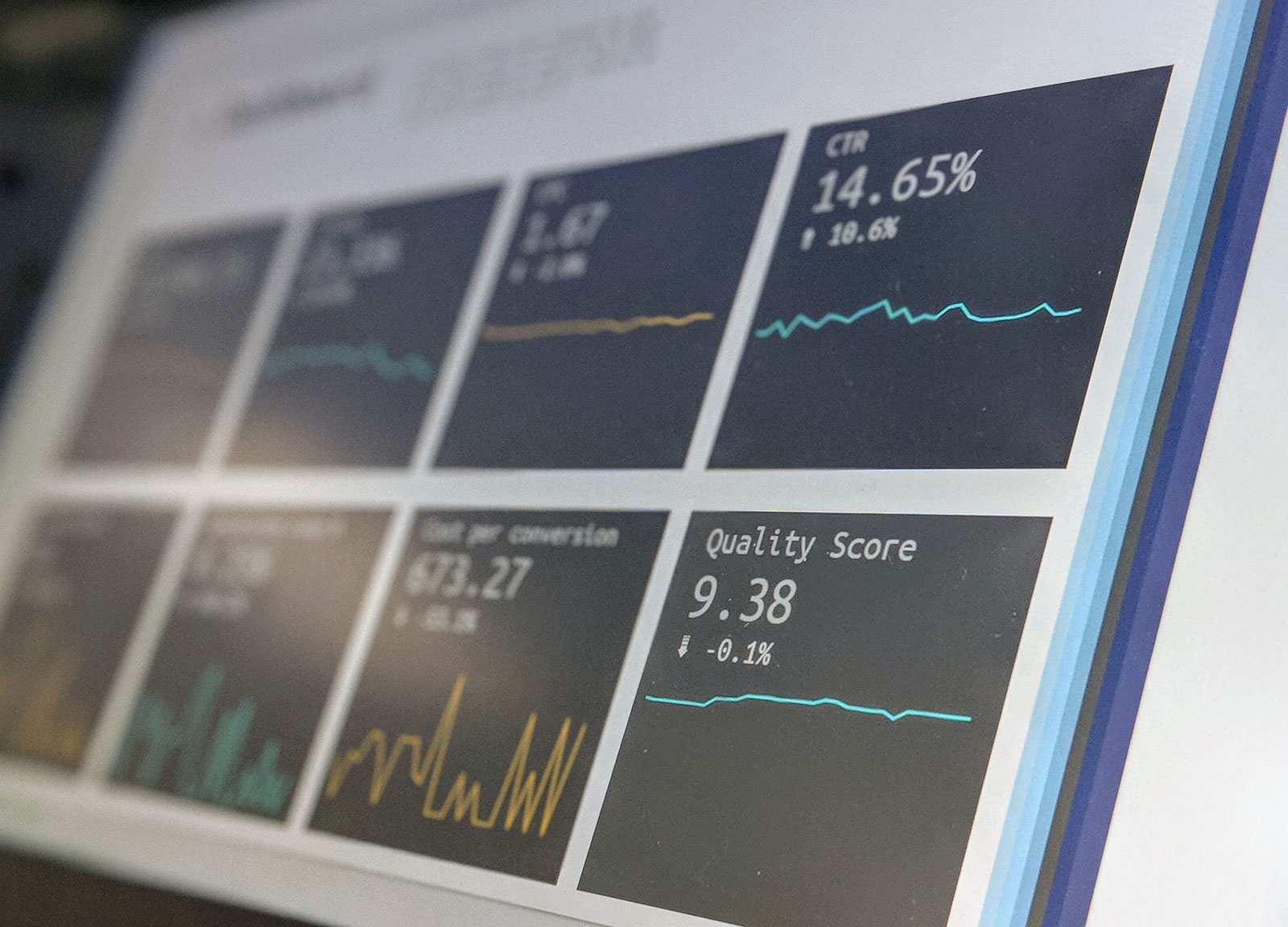
The best empirical data answers specific questions — because when data is specific, taking action on it becomes easier. The number of new elements, as well as the complexity emerging from the relational diagram in Figure 6, suggests that this is by no means an incremental change but represents a true paradigm shift. This raises many research questions for academics, with the added difficulty of finding robust empirical foundations, given the recency of the phenomenon.
Data-driven architecture, encompassing patterns like data lakehouse and data mesh, orchestrates data-driven solutions. Lastly, our factory alerting system example showcases how AI, ML, and data orchestrate an efficient incident response. A data-driven approach empowers innovation, intelligent decisions, and seamless user experiences in the tech landscape. The data integration requirements force, today more than ever, functional integration among other operational departments, such as production, maintenance, logistics, etc. (Liao et al. Reference Liao, Chen and Deng2010). Tesla initially did not hire expert engineers from the automotive field to avoid fixation on traditional architectures and competence biases. However, it is possible that some erroneous design choices could have been prevented with proper specific knowledge (Welch Reference Welch2018).
Measures the percentage of users who stop using the product or service within a specified period. Measures the percentage of users actively engaging with the product or service within a specified period. Imagine your data as a room cluttered with treasures, each piece is a data point which is holding a potential insight. Cleaning and organizing are the secret sauce in data-driven UX design. It’s akin to decluttering, removing the irrelevant to find valuable gems. Categorizing data is like putting things on shelves—making it easily accessible.
Automated causal inference in application to randomized controlled clinical trials
Gain a shared understanding and vocabulary around data across the team, and build a culture of data-driven decision making. Data-Driven Design was created for mid to senior level designers looking to level up their data proficiency – and their career. We began to realize that what seemed like a good change for some people would likely prove unhelpful or even distracting to others.
Touch the subject of quantitative and qualitative data by explaining how they relate and why it’s crucial to use both of those data types in the design process. You can use both quantitative and qualitative data to inform the design process. Data-driven design can be defined as a decision-making approach to the design process that heavily relies on collected data about customers’ behavior and attitude. The design process is often treated as an art, and intuition usually is the way to go. That’s why this approach may lead to a design that is out of alignment with the needs of a user. Data-driven UI design can require a variety of different kinds of data to determine the best way to create an optimal user experience.
Data-Driven Design in UX: From Types to Implementation
Modern organizations are looking for individuals who are experts in UX design processes and skilled in data-driven decision-making, understanding at least some nuances of data collection and analysis. A UX designer must understand and acquire the skills for data-driven decision-making. I’m Rajat Bagree, Founder & Director of ProCreator and Design Educator at ProApp.
BREAKING THE CURVE: BIG DATA AND DESIGN - Artforum
BREAKING THE CURVE: BIG DATA AND DESIGN.
Posted: Sat, 23 Sep 2023 10:27:33 GMT [source]
Our methodology allows for early design and planning of complex projects using a process for design, analysis and workflow to quickly evaluate complex information and scenarios. By itself, even the most specific quantitative data is not enough to tell you what needs to be iterated or improved in your product design. An empathy map is a powerful visual tool that helps you better understand your customers by organizing their behavior and motivation. It’s essentially a visual representation of what your users are thinking and feeling as they interact with your product or service—allowing you to step into your customer's shoes and gain insight into their needs, wants, and desires.
Tailoring your products to your user’s preferences, goals, and behaviors make them far more engaging. The approach includes surveys, user testing, A/B testing, site analytics, and consumer research. Ideally, these should all come into play throughout the data-driven design process. Constantly designing new iterations of a product with improvements made based on data rather than intuition or hunches allows designers to create better experiences for the people using their products. Staying on top of the data available lets designers head off problems with user experience and behavior changes before they impact the bottom line.
This data can include things like website or app analytics on an existing iteration of a product, user interviews, A/B and multivariate test results, behavior flows, and other types of UX research. Data gives insight to designers so they can create the best possible designs for the people who use their products. This data can come in multiple forms, from primary and secondary sources. The important thing for designers is to figure out which datasets are worth using to base their designs, and which ones to disregard. From the data, the team realized that highlighting the link showed people that this area existed on MSN, and that people would remember it. This case study shows us how a data-driven design process can provide insights we’d never considered—helping limit the effect of assumptions and biases on final designs.
Continuously running A/B or multivariate tests to improve a design can result in huge conversion increases. 37Signals, for example, has run a variety of A/B tests on its homepage in order to determine the optimal design (sometimes seeing differences of more than 100% between the two versions). Their next experiment with design changes also produced counterintuitive results. While the Design team assumed people would prefer a light app, the data came back and dark was the winner. Here are Chris’ top stories and takeaways on how to use data to drive and inform your decisions.
Examples from industry are generally provided throughout the paper to exemplify conceptual statements; however, a single case study has been predominantly chosen in order to have a common thread in the discussion. The case study is somewhat freely inspired by news and events reported from Tesla, the well-known battery-electric car producer. Tesla, in fact, easily lends itself as a poster example of transformations occurring in the design and innovation contexts following the emergence of ‘digital’ technologies.
Finding answers to these research questions is of obvious relevance for firms as well, since they risk having to enter this new paradigm by relying on intuition and (potentially costly) trial and error. Finally, there are very significant implications on education, due to the impact on the curricula of future engineers and designers. These new design pilots lead again to operative (NPD-OP) and organizational (NPD-ORG) changes. Additionally, a further consequence emerges in relation to the management of the process (NPD-MAN).